How Do I Get Booked to Speak at Business Groups and Conferences?

Organizers book people they already know. Not the best reel, not the best one sheet, not the best cold email. They book the person they have watched teach something useful. If you want on a stage, get known in the rooms that stage comes from, teach small for free, and be easy to work with.
Here is why that is true, and where to start this week.
Why Nobody Books a Stranger
Someone asked me this year whether getting speaking engagements was a reasonable goal for him. My answer was blunt, and it is the same answer I would give you.
You will never get on my stage if I do not know who you are.
That is not gatekeeping. It is risk. When I put someone in front of my audience I am lending them my credibility for twenty minutes. If they bomb, the room does not blame the speaker. The room blames me. I am the one who told them this was worth their time.
So organizers do the safe thing. They book the people they have already seen work, or the people another organizer vouches for. Every speaker bureau profile and every “I would love to speak at your event” email is an attempt to skip that step, and none of it works, because none of it removes the risk.
Your job is not to get better at asking. Your job is to stop being a stranger.
What Organizers Are Actually Afraid Of
Three things, and they are all the same thing wearing different clothes.
They are afraid you will pitch. We have had sponsor sessions at the Badass Business Summit that turned into a straight sales pitch with no teaching in them. The room checks out inside two minutes and the feedback tells us about it for a week.
They are afraid you will be all energy and no takeaway. The hardest piece of feedback we ever got on a keynote was that the speaker brought great energy and no tangible takeaway. Everybody liked him. Nobody could tell me what they learned.
They are afraid you will be difficult. Late with your materials. Particular about the AV. Negotiating the fee three days out.
Be the speaker who teaches one usable thing, sends everything early, and makes no demands, and you are in a very small group. Organizers talk to each other. That reputation travels faster than any marketing you will do.
How Do I Get in Front of Organizers?
Start smaller than you want to.
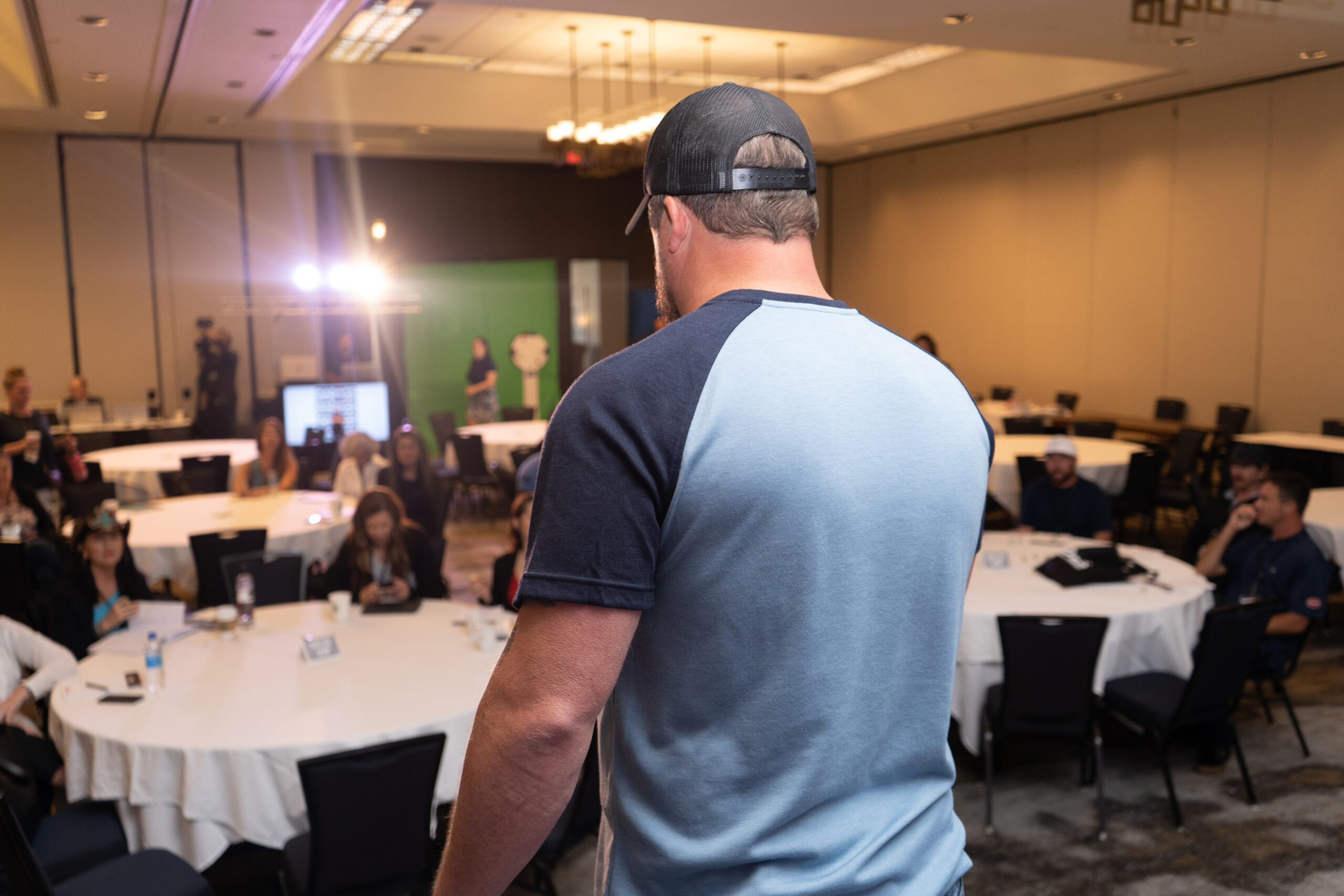
The stage you want is not the stage you are ready to ask for. Go find the rooms nobody is competing for. A networking chapter meeting. A chamber committee. An association’s monthly lunch. A podcast with two hundred listeners. These rooms need content every single week and they are always short of people who will show up and actually teach.
Four steps, in order:
- Pick five to ten rooms where your buyers or your referral partners already gather. Not rooms full of other speakers.
- Show up as a member first, not as a speaker. Learn the room before you ask for the microphone.
- Offer to teach one specific thing for free. Not your story. One problem the room has, and how to fix it.
- After you teach, ask the organizer one question: who else should hear this? That question is how one room becomes four.
In Success Champion Networking we run teaching slots in chapters every week. The people who end up on the bigger stages are almost always the ones who taught in a chapter first, got good while the stakes were low, and got recommended into the next room. Nobody skipped that.
This is the same thing I mean when I talk about a silent reputation. You are not trying to be loud. You are trying to be the obvious choice when a slot opens.
What Should I Speak On?
A speaker asked me a version of this last summer, and the real question underneath it was whether she would be talking to people who could actually partner with her or buy what she sells.
That is the test. Your topic has to do two jobs at once. It has to genuinely serve the audience, and it has to put you in front of people who could hire you or refer you. If it only does the first, you are doing volunteer work. If it only does the second, you are the pitch everyone is afraid of.
Pick the problem you solve, and go narrower than feels comfortable. “Leadership” is not a topic. “Why your best salesperson stops producing in year three” is a topic. Narrow is what makes an organizer able to picture the slot you fit in.
Then build one talk. Not five. One talk you can deliver cold, in any room, cut to any length, without notes. Five mediocre talks get you nothing. One talk you have run forty times gets you recommended.
What About Speaking Fees?
Early on you are buying reps, not fees.
Most business groups do not pay. A lot of conferences do not pay, or they pay travel. That is not an insult, it is the market telling you that you have not built the track record that commands a number yet.
Here is the practical part. Lead with the fee question and you have told the organizer you are there for you. Lead with the audience question and you have told them something different. Ask who is in the room, ask what they want people walking out believing, and ask whether you can record it.
That recording is the real payment for your first ten talks. It is your reel, it is your proof to the next organizer, and it is the thing that eventually lets you quote a number without flinching.
Start This Week
- List five rooms where your buyers or referral partners already meet. Get the organizer’s name for each one.
- Write one sentence describing the single thing you teach. If it takes two sentences, it is still too broad.
- Go to two of those rooms as an attendee. Say nothing about speaking.
- Offer to teach your one thing in the room where you already know somebody. Record it on your phone from the back of the room.
The shortest path to a stage is being useful in a small room, in front of someone who runs a bigger one. Everything else is a shortcut that does not exist.
If you want rooms that meet every week and need teachers, that is literally what Success Champion Networking chapters are. Go visit one, learn how the room works, and teach when you are ready.
Frequently Asked Questions
Do I need a demo reel before I can get booked?
No. Get booked in a small room first, record it on a phone from the back, and cut thirty seconds of you teaching. A reel made from a real room beats a produced sizzle video, because an organizer wants to see an audience reacting to you.
Should I join a speaker bureau?
Not early. Bureaus place speakers who already have a fee, a track record and a market. Until then they will not take you, and chasing them is time you could spend teaching in rooms where the organizer can see you work.
How long should my talk be?
Build one talk at forty five minutes and know how to cut it to twenty and to fifteen. Most business groups give you twenty minutes or less. The person who can deliver the same value in a shorter slot gets asked back.
What do I do when an organizer says no?
Ask what would make it a yes, then stay in the room anyway. Most no answers are about timing or an unknown speaker, not about you. Organizers book from the people still around when a slot opens up.