Why I am Not Getting Referrals From Networking (And the System That Fixes It)
Most B2B owners aren’t getting referrals from networking because they treat every conversation the same. They show up, they talk about what they do, they schedule another coffee, and they repeat that forever with nothing to show for it. The problem isn’t the networking. The problem is there’s no system deciding who actually deserves the next conversation.
Here’s what’s broken and how to fix it starting this week.
The Lie You Were Told About Networking
Someone told you that if you just showed up enough and met enough people, the referrals would come.
That’s not how it works.
I spent years watching smart, hardworking business owners grind through virtual coffees and networking events with nothing to show for it. Not because they weren’t trying. Because nobody ever told them that not every relationship deserves the same investment.
Here’s what bad networking looks like. You get on a virtual coffee. You both talk about what you do. You both say you’ll connect again soon. Neither of you follows up. You repeat that same conversation every week for years and wonder why your network isn’t producing anything.
The issue isn’t that you’re bad at networking. The issue is that you’re giving your best time and energy to people who haven’t earned it yet.
Why Referrals Actually Happen
Referrals don’t come from visibility. They come from trust built through specific, repeated behavior over time.
For someone to refer you they need to know exactly what you do and who you help. They need to trust you enough to put their reputation behind the recommendation. And they need to be in a conversation where your name naturally comes up.
Most people in your network can’t clear that first bar. You’ve been so vague about what you do that your closest contacts couldn’t explain it to someone else if they tried.
Think about the people in your network right now. Some of them know your name. A few of them trust you. But how many of them are actively out there talking about you in rooms you’re not in? How many of them picked up the phone this week to send someone your way without you asking?
That last group is where referrals come from. You can’t get there by accident. You get there by having a system that decides who earns deeper access to your time.
The Real Problem Is You’re Treating Everyone the Same
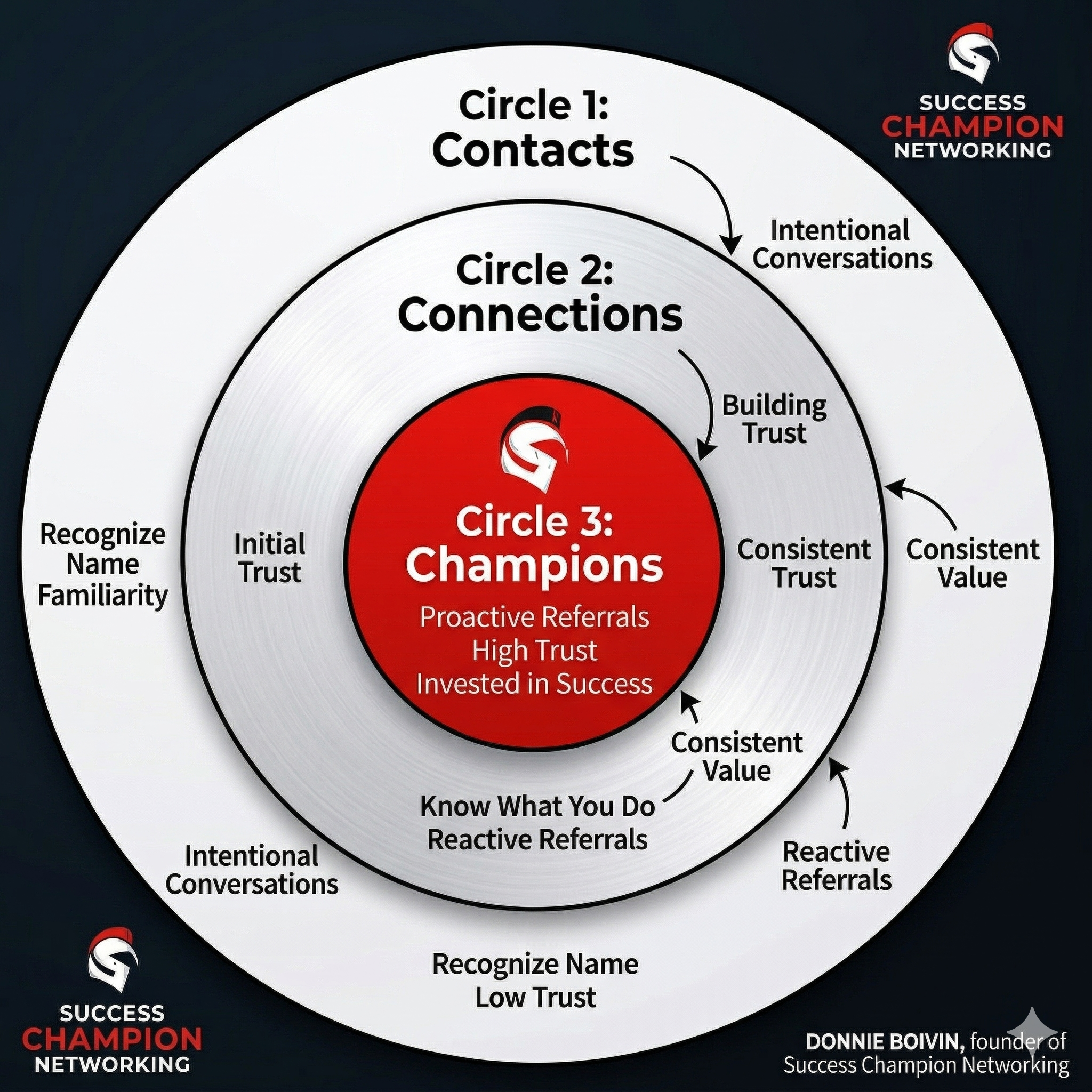
You’ve got Untouchables in your network getting the same energy as people you just met last Tuesday. You’ve got people who’ve never sent you a single referral getting your best introductions. And you’ve got people who would go to war for you that you haven’t talked to in six months.
That’s not a relationship strategy. That’s just noise.
The people who consistently generate referrals don’t have bigger networks. They have better filters. They know exactly who has earned the next conversation and who hasn’t. And they protect their time accordingly.
The System That Changes Everything: PACT
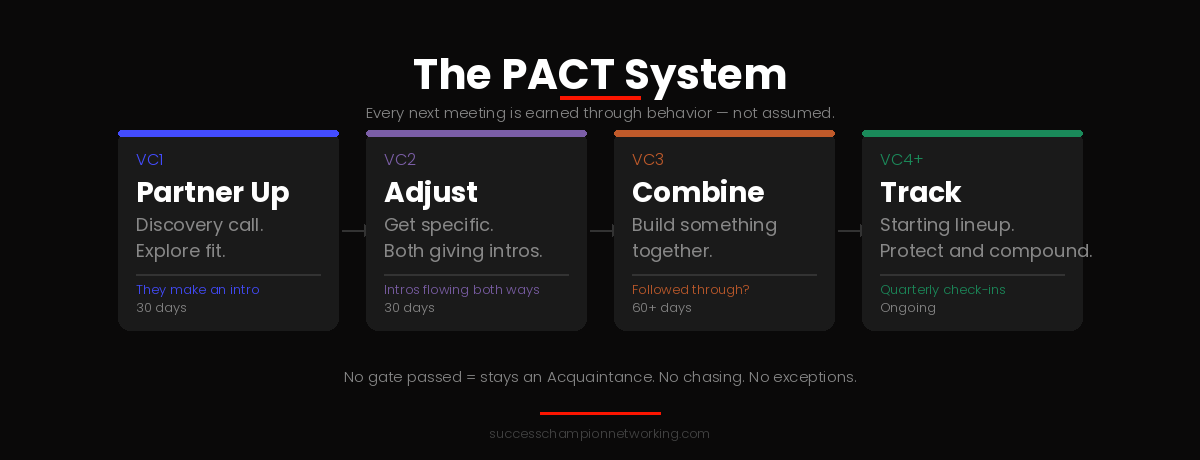
I built the PACT system because I kept watching this problem play out over and over. It stands for Partner Up, Adjust, Combine, and Track. It’s a behavior-gated Virtual Coffee framework where every next meeting has to be earned through actions, not words.
Here’s how it works.
VC1: Partner Up
This is your first conversation with someone. The goal is discovery, not a sales pitch.
You want to understand their business and their ideal client. You share your Synergy Triangle and your ideal client profile. You give them at least one useful resource, name, or idea before you hang up. And you send a thank-you within 24 hours with a specific detail from the conversation.
But here’s where PACT is different from every other networking advice you’ve heard. There is a gate to get to the second conversation.
Did they make an introduction during or right after VC1?
Even one intro tells you everything. It tells you they’re a giver and not just a taker. If they make an intro, you schedule VC2 for 30 days out. If they don’t make an intro within 30 days, they stay an Acquaintance. There is no VC2. You don’t chase it. You move on.
VC2: Adjust
They earned this meeting by making an introduction. That matters. Most people you meet won’t clear this bar and that’s the point.
In VC2 you get specific. You review their Synergy Triangle and figure out who they still need to meet. You get into the details of ideal client profiles. You make at least one strategic introduction during the call itself. And you clarify the referral profile for both of you so there’s no ambiguity about what good looks like.
The gate to VC3 is tighter. Both of you need to have sent intros between VC1 and VC2, and they need to make more introductions during VC2 itself. Both things have to be true. One without the other means you stay in Adjust mode and watch for another 30 days before deciding.
VC3: Combine
They’ve proven they’re a giver consistently. Now you stop just making introductions and start building something together.
In VC3 you plan something real. A workshop, a joint event, a piece of content, a shared introduction to a key client. You set a specific date and a specific commitment. Not “we should do something together.” A date and a deliverable.
The gate to VC4 is simple. Did they actually follow through on what they committed to? Did the workshop happen? Did the content get created? Did the referral get sent?
No follow-through means they’re back to Acquaintance status. This isn’t personal. It’s data. Talk without action is just talk.
VC4 and Beyond: Track
They’ve earned Starting Lineup status. These are your most protected relationships and the ones that will generate the most business for you over time.
You schedule at least one quarterly check-in without waiting for them to reach out. You make introductions for them without being asked. You promote their wins publicly. You ask them one specific question: what is the one thing you could do right now to help them grow?
And once every year you audit the relationship. Do they still earn this spot? Are they still sending referrals? Are they still showing up?
Never assume a relationship runs itself. The best partnerships in your network still need maintenance.
What This Looks Like in Practice
When you run your networking through PACT, a few things happen fast.
Your calendar gets cleaner because you stop giving VC2 meetings to people who haven’t made a single introduction. You stop dreading networking because you know exactly what you’re looking for in every conversation. And the referrals start coming because you’ve invested your deepest relationships in people who have already proven they’re willing to give.
Most people spend years in random virtual coffees hoping something sticks. PACT tells you within 30 days whether someone is worth a deeper investment.
Start This Week
Look at the virtual coffees on your calendar right now. For each one, ask yourself one question before you get on the call.
Has this person made an introduction for me yet?
If yes, you’re building a real relationship. Go deeper. If no, treat it like a VC1 and watch for the behavior that tells you whether VC2 is worth scheduling.
That single filter will change how you spend your networking time starting this week.
Frequently Asked Questions
What if someone is genuinely interested but hasn’t made an intro yet? Interest without action is just politeness. The intro is the minimum viable behavior that tells you someone is a giver. It doesn’t have to be a perfect intro. It just has to happen.
Does this work for introverts who hate asking for introductions? PACT actually works especially well for introverts because it removes the ambiguity. You’re not guessing whether a relationship is working. You have a clear answer within 30 days.
How many VC1 conversations should I be having? As many as you want. The system filters them naturally. Most won’t make it to VC2 and that’s not failure. That’s the filter working.
What if I’ve been networking randomly for years and have a big list of contacts with no system? Start fresh. Pick your top ten contacts and run them through the PACT lens. Have they made introductions for you? Have they followed through on commitments? That tells you who deserves your next investment.
If you want to network inside a structure that already runs on this system, come see what we’re doing at Success Champion Networking. Every chapter is built around behavior-gated relationships. You don’t have to build the filter yourself. Visit a Chapter.